
Calculate Roof Area
Embed this calculator on your site
Add this calculator to your blog, landing page, or resource hub with responsive embed code. Include the optional attribution card to keep a source backlink for SEO trust signals.
1) Responsive iframe embed
Best for direct interactivity in modern layouts.
2) Minimal calculator + backlink
No heading/image text above widget. Only calculator area, result area, and attribution link.
How to calculate roof area without fooling yourself
Roof area sounds like a single number, but in real life it is a bundle of decisions: what you mean by “area” (plan footprint versus sloped deck), how you treat eaves, and whether your roof is simple enough for a rectangle model. This guide pairs with the calculator above to keep you honest—especially before you order squares of shingles based on a napkin sketch.
Plan area versus sloped deck area
Plan area is the flat projection you would see on a site plan: length times width in square feet. Roof deck area is closer to what you walk on across the slopes—larger than plan when pitch steepens, because each slope is a parallelogram-like surface stretched in the third dimension. For a simplified symmetric gable over a rectangle, a common textbook move multiplies plan area by √(1 + (rise/12)²), where “rise per 12” is the pitch expressed the way roofers speak it (for example 6:12). That shortcut is useful until your roof stops being a tidy textbook picture.
When the rectangle model is fair—and when it lies
The tool assumes you can describe the roof footprint as a rectangle (after you decide whether your entered length and width include eaves or not). That is fair for many small homes with a single dominant ridge and uncomplicated hips—as a first pass. It lies politely when you have valleys cutting across planes, dormers poking out, stepped pitches, turrets, or wide perimeter hips where the “extra” surface area is not captured by a single bump factor. For ordering materials on a cut-up roof, you want a field takeoff or a professional measure, not a website comfort blanket.
Squares, bundles, and the waste you still have to buy
Shingles are sold in squares: one square is 100 square feet of roof area coverage at the stated exposure, not “100 feet of shingles rolled out like carpet.” Manufacturers publish coverage tables; crews add starter strips, ridge cap, and valley metal; slopes eat starter courses; and steep jobs may require more nails and more caution—translation: you should not treat deck area as identical to purchase quantity. The calculator’s “+10% waste allowance” row is a classroom-style sensitivity nudge, not a universal rule for your supplier and your wind zone.
Measuring without becoming a statistic
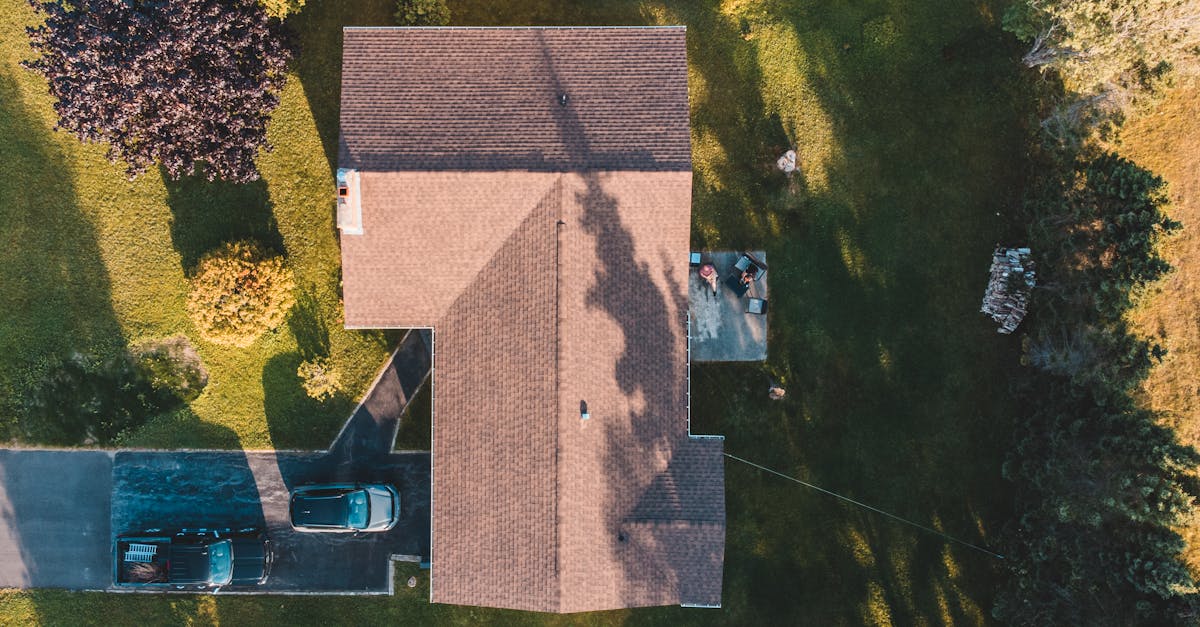
If you can measure the building at the ground safely and confirm your rectangle matches the eave lines, you are already doing better than eyeballing from across the street. Satellite imagery can help when scale is trustworthy, but shadows and lens distortion punish overconfidence. If you need precision for insurance, litigation, or a tight budget, pay for the right professional: a roofer’s takeoff, a survey-grade drawing, or a drone workflow that outputs orthomosaic measurements you can verify.
If you only know pitch in degrees
Some drawings label slope as an angle from horizontal. You can convert mentally: tangent of the angle equals rise divided by run. For the common “per 12” convention, set run to 12 and read rise as 12·tan(θ). A 26.6° slope is roughly 6:12 because tan(26.6°) ≈ 0.5. If you are not comfortable with trig, skip the conversion drama and ask your designer for the pitch in the same language your supplier quotes—usually rise-in-run or an explicit ratio on the plan sheet.
Why “hip” is handled cautiously here
Hip roofs add perimeter length where hips cut across corners, and the true deck area depends on plan aspect ratio, hip pitch rules, and truncation details. Rather than pretending a single formula fits every hip in America, this site uses an illustrative bump against the gable baseline so you can see directionally how much a hip might cost in area—then you stop and get a real takeoff if money is on the line.
Closing reminder
Use the calculator to build intuition: how much does one notch of pitch change deck area? How sensitive is the headline number to a few inches of eave? Those are good questions to ask before you sign a contract. The moment you are about to transfer cash for materials, downgrade the tool from “oracle” to “study aid” and upgrade your data from “approximate” to “verified.”